Two Family Drama Novels
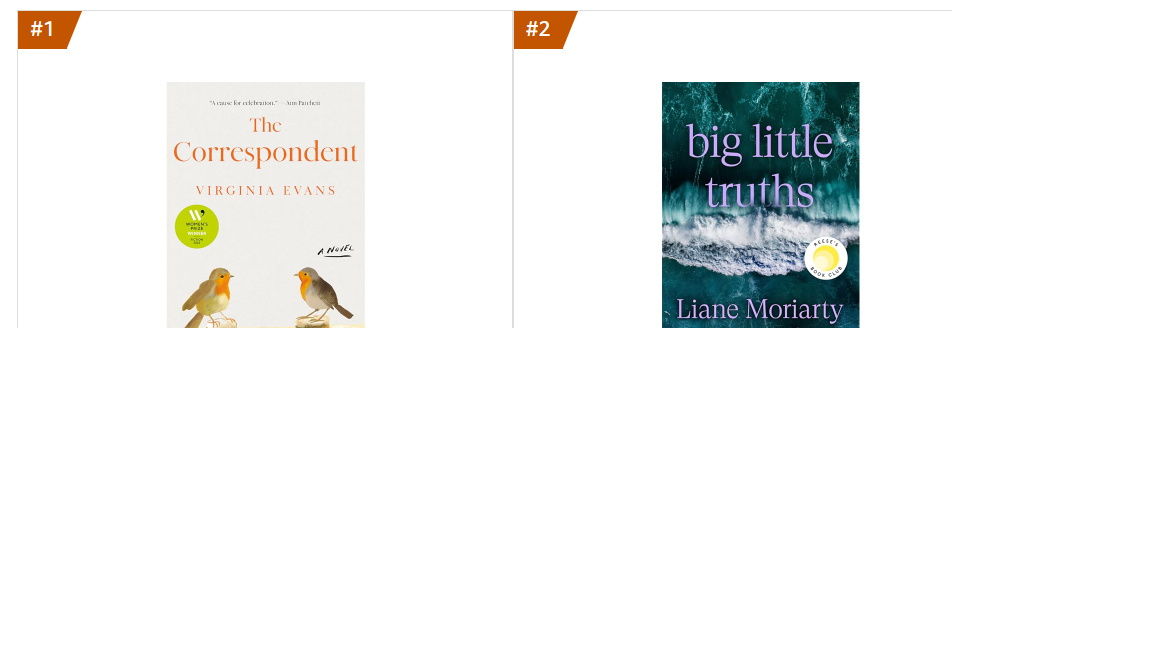
What Apples Never Fall and Gone Tonight Taught Me About Patience and Payoff
I picked up two family dramas this year expecting roughly the same reading experience: a missing mother, a suspicious daughter, some domestic secrets, a satisfying unraveling. What I got instead were two completely different animals wearing the same genre costume. Okay, not completely identical subgenres—but the covers and descriptions look similar enough, and this needs a close reading to determine.
Apples Never Fall is Liane Moriarty doing what Liane Moriarty does — a sprawling, warm, occasionally maddening family saga where a mother's disappearance is a hook in the beginning of the book but seems almost besides the point in over three quarters of the book when extensive character backgrounds are being painted. Gone Tonight by Sarah Pekkanen is leaner and meaner, a mother-daughter thriller where every chapter is a held breath. Both are "family drama." Both involve a mother, a daughter, and something being hidden. And yet finishing one felt like coming home from a long, gossipy dinner with relatives, and finishing the other felt like being let out of a locked room.
So I want to actually pick these two apart — not to crown a winner, but because the differences tell you something useful about how this genre works, and what it asks of a reader. I'm sure both books have their fans, given their success, so this piece is just my opinion. Regardless, this comparison of mine actually taught me a lot about writing in this genre.
Round 1: Who do you actually care about?
Apples Never Fall throws a wide net. Joy and Stan's four adult children all get real interiority — their marriages, their resentments, their old sibling grudges. Even total strangers get a moment: a waitress trying to pry an order out of bickering siblings, gossiping customers at a hair salon, a taxi driver with opinions. It's the literary equivalent of a big noisy family reunion where you eavesdrop on everyone's table.
Gone Tonight narrows the lens to exactly two people: Ruth and her daughter Catherine, alternating first-person chapters. That's it. No hairdresser cameos. And here's the catch — because the whole plot depends on both women hiding things from each other (and from us), it's actually harder to fully root for either of them. You're kept at arm's length from the two people you're supposed to care about most, right when you want to lean in.
Verdict: Moriarty wins on sheer affection — you finish Apples fond of nearly everyone. Pekkanen wins on tension, but at a real cost to warmth. However, it's easier to empathise with a first person narrator than a third one. Having so many characters without a predomiant one can also make me feel unsure who to root for.
Round 2: How fast do you want to go?
Structurally these books couldn't be more different. Apples uses long chapters, two time threads, extended flashbacks, and lets scenes breathe — sometimes for a very long time. It's a slow simmer. Gone Tonight is all short chapters, alternating POV, propulsive momentum. You can read fifty pages of it without noticing.
Here's the thing about slow simmers, though: the longer a book takes to lay its cards down, the more it owes you at the end. A 400-page unspooling earns patience only if the payoff justifies the wait. A 300-page sprint doesn't have that problem — but it has a different one, which brings me to...
Round 3: Does the mystery actually matter?
This might be the most interesting difference between the two books, and it's the one I didn't expect. In Apples Never Fall, the central mystery — where did Joy go, and did Stan do something to her — is a misunderstanding, almost a MacGuffin. It barely seems to affect how the family behaves day to day, the narrative is constantly about the emotional dichotomy of trusting one parent over the other. The police investigation gets surprisingly little page space. In Apples, the mystery is furniture — everyone just keeps living around it. The real story is character studies wearing clothes of a story that promises suspense.
Gone Tonight is the opposite. The mystery — why does Ruth go to such extreme lengths to protect Catherine, even faking her own decline — is the engine. Pull it out and there's no book left. Every scene exists to either deepen or delay that question.
Neither approach is wrong, but they ask different things of you as a reader. One rewards you for caring about people regardless of plot. The other only works if you never stop needing to know. As a writer, I prefer stories where character is exemplified by action in the story present, not primarily by their actions in the backstory. There are ways to make a backstory suspenseful though, if you read my other blog.
Round 4: Is anyone allowed to be funny?
Small thing, but it matters: Apples lets itself be funny in ordinary, lived-in ways — sibling bickering, awkward small talk, the absurdity of everyday family life. It's part of why the long chapters don't feel like a slog; you're never far from a moment of levity. Gone Tonight barely cracks a smile, which fits its tighter, tenser design, but it also means there's less air in the room. By the midpoint I caught myself wanting one scene that wasn't load-bearing for the plot.
Round 5: What do you forgive, and what do you not?
Apples repeats itself — the same plot beats revisited from different characters' points of view. It's a little indulgent. But because the book has already earned your goodwill through humor and character depth, you tend to forgive it; it feels less like padding and more like getting to know the family better. There are moments where I think the scenes are over-written, taking away the need for the reader's imagination.
Gone Tonight is tighter and doesn't repeat itself, which is admirable — but tightness has a price. To keep the twists working, it asks you to accept a few plausibility stretches that a slower book might have had room to earn properly. I found myself thinking "wait, would that actually work?" more than once. A slower book might have bought its way out of that skepticism; a fast one doesn't always have the space to. This doesn't mean that Apples does not have plausibility issues (especially concerning the mechanism of Joy's disappearance and reliance on coincidences).
So, what does this tell us about family dramas in general?
Mainly this: there is no one correct way to build this genre, and a reader's patience is not an unlimited resource you're entitled to. If you're going to take your time — multiple POVs, long chapters, flashbacks within flashbacks — you'd better be building toward something that feels worth the wait. If you're going to move fast and keep secrets, you'd better make sure the secrets can survive a second look.
The other thing I kept noticing, especially in Apples, is that even a multi-POV family drama needs one clear narrative spine. It's fine — great, even — to give side characters real depth (there's a whole subplot involving one sibling's personal life that could practically be its own novella). But those detours only work if they still connect back to the main story and if each character gets something like an actual arc. The moment a subplot starts to feel like a detour for its own sake, that's when a reader's patience starts to fray, and "too many subplots" turns from a compliment about richness into a complaint about focus.
Maybe that's the real dividing line in family drama: not fast versus slow, or plot-driven versus character-driven, but whether the book knows exactly what it's asking you to be patient for.
A quick test for your next family drama pick: by the 100-page mark, can you say which character you root for the most? And what each major character actually wants? If yes to both, you're probably in good hands, however long the book decides to take.